
Up Next

The Universe Has Been Expanding Since the Big Bang. Just Not How We Thought.
Season 11
Episode 32
17:40


Ghost Particles Are Exposing Hidden Black Holes. They Just Won a Nobel Prize.
Season 12
Episode 2
17:28


Back to Show
PBS Space Time
The Quantum Experiment That Breaks Time
Season 11
Episode 31
Modern physics is weird. Quantum mechanics gives us Schrödinger's cat, simultaneously alive and dead. Relativity gives us the twin paradox, where a spacefaring twin ages more slowly. But what if we combined them and sent a quantum twin across the galaxy? Could we be both old and young at once? What would that reveal about the quantum nature of time... and birthday candles?
Support Provided By

17:28
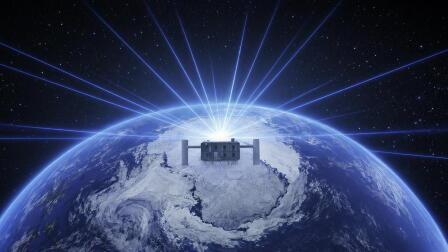
The 2026 Nobel in Physics went to Dr. Halzen for turning Antarctica into a neutrino telescope.

14:36
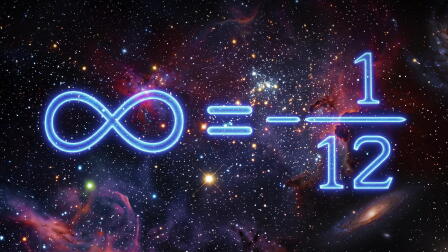
Can adding every positive whole number really give you -1/12?

15:22
It’s believed empty space can be crystalized and we may have observed this for the first time.

14:20
Gigantic black holes existed in a cosmic eyeblink after the Big Bang. That should be impossible.

15:15
A decade later, a leading theory may finally explain Tabby’s Star, the galaxy’s weirdest star.

16:31
LIGO may have found an impossible black hole, hinting at primordial relics from the Big Bang.

17:40
DESI and DES studied dark energy. Together, what can they tell us?

17:39
It's possible that an event horizon is forming right behind and you won't know until its too late.

20:48
Are there no alien signals to find... or do we need to update how we search for them?

14:27
Physicists hope Planck stars can save us from black hole singularities and paradoxes.

17:41
Galaxies older than the universe? Webb's findings keep defying our best explanations.

16:16
Earth's core: solid or liquid? Yes — we know more about distant galaxies than our own interior.