
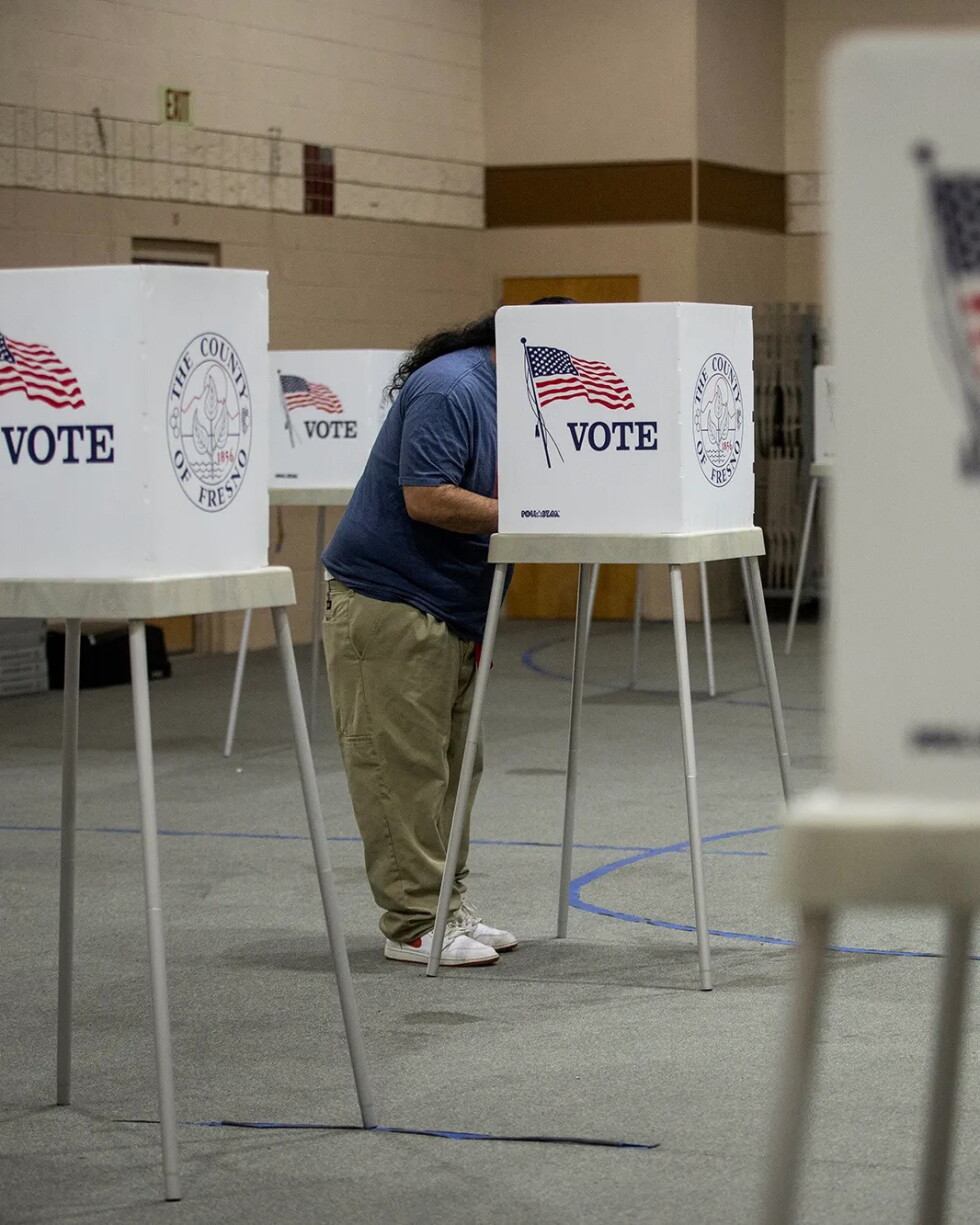


Examining the Impact of Voting
Mindy Romero from USC Price explains why your—yes, YOUR—vote is important.

Mindy Romero from USC Price explains why your—yes, YOUR—vote is important.
Important Things to Know About Your Right to Vote
The election process can be a little confusing. From potentially getting time off to cast a vote, to how to handle issues at the poll, here are five things to keep in mind when voting – whether you’re a first time voter or have voted in the past.

The election process can be a little confusing. From potentially getting time off to cast a vote, to how to handle issues at the poll, here are five things to keep in mind when voting – whether you’re a first time voter or have voted in the past.
Aspectos importantes que debes conocer sobre tu derecho a votar
Votar puede ser un poco confuso. Desde la posibilidad de obtener tiempo libre del trabajo para votar, hasta cómo manejar problemas que pueden surgir si votas es persona. Sea la primera vez que votas o si has votado en el pasado, aqui hay cinco cosas que debes tomar en cuenta al votar.

Votar puede ser un poco confuso. Desde la posibilidad de obtener tiempo libre del trabajo para votar, hasta cómo manejar problemas que pueden surgir si votas es persona. Sea la primera vez que votas o si has votado en el pasado, aqui hay cinco cosas que debes tomar en cuenta al votar.
Props in a Minute
Prop 38 explained l California 2026 election
Proposition 38: Borrow $8.4 billion for immunology research
Proposition 38 would create an $8.4 billion bond largely to fund research into fighting cancer, heart disease and Alzheimer’s, plus other diseases that can be treated through immunotherapies. Half the money would go to a research institute affiliated with the University of California. The other half would be distributed to select public universities and nonprofits. Drugs created through this research would have to be discounted at 20% for Californians and 10% of any revenue from the drugs would go back to the state general fund. Philanthropist and medical inventor Gary Michelson put this measure on the ballot.
Proposition 38 would create an $8.4 billion bond largely to fund research into fighting cancer, heart disease and Alzheimer’s, plus other diseases that can be treated through immunotherapies. Half the money would go to a research institute affiliated with the University of California. The other half would be distributed to select public universities and nonprofits. Drugs created through this research would have to be discounted at 20% for Californians and 10% of any revenue from the drugs would go back to the state general fund. Philanthropist and medical inventor Gary Michelson put this measure on the ballot.
Prop. 40, 41 and 42 explained | California 2026 election
California voters will soon decide whether to tax billionaires (Prop. 40) — but even if a majority says yes, the measure could still lose to either of two billionaire-funded measures designed to block it (Prop. 41 and Prop. 42). Proposition 40, Proposition 41 and Proposition 42.

California voters will soon decide whether to tax billionaires (Prop. 40) — but even if a majority says yes, the measure could still lose to either of two billionaire-funded measures designed to block it (Prop. 41 and Prop. 42). Proposition 40, Proposition 41 and Proposition 42.
Prop 45 explained l California 2026 election
Proposition 45 would limit reviews under the state’s landmark environmental law, the California Environmental Quality Act. Placed on the ballot by the California Chamber of Commerce, the measure aims to help developers advance projects they designate as “essential” more quickly and easily. It would impose a 365-day limit on environmental reviews for those projects, including infrastructure like roads and bridges, housing, schools, broadband and wildfire mitigation. It would also require courts to rule within 270 days on lawsuits related to the environmental review law.

Proposition 45 would limit reviews under the state’s landmark environmental law, the California Environmental Quality Act. Placed on the ballot by the California Chamber of Commerce, the measure aims to help developers advance projects they designate as “essential” more quickly and easily. It would impose a 365-day limit on environmental reviews for those projects, including infrastructure like roads and bridges, housing, schools, broadband and wildfire mitigation. It would also require courts to rule within 270 days on lawsuits related to the environmental review law.
Prop 4 explained l California 2026 election
Proposition 4: Allow public financing of political campaigns
This would authorize California’s state and local governments to establish public campaign funds for candidates if they choose to. It would reverse a 1988 ban on such systems for the state and most local governments. Currently, only five California cities have public financing for local offices, including Berkeley and San Francisco.
This would authorize California’s state and local governments to establish public campaign funds for candidates if they choose to. It would reverse a 1988 ban on such systems for the state and most local governments. Currently, only five California cities have public financing for local offices, including Berkeley and San Francisco.
Prop 1 explained l California 2026 election
Prop. 1 would allow the state to sell $11.25 billion in bonds to fund various affordable housing programs. Of that total amount, $1.25 billion would go toward veteran housing, while the rest would fund rental homes, homeownership programs, farmworker housing, affordable student housing, tribal housing and more. The bond is expected to help fund up to 40,000 multifamily rental units, while also helping another 40,000 households buy a home.

Prop. 1 would allow the state to sell $11.25 billion in bonds to fund various affordable housing programs. Of that total amount, $1.25 billion would go toward veteran housing, while the rest would fund rental homes, homeownership programs, farmworker housing, affordable student housing, tribal housing and more. The bond is expected to help fund up to 40,000 multifamily rental units, while also helping another 40,000 households buy a home.
Prop 43 explained l California 2026 election
Proposition 43: Raise vote threshold for special tax measures
This would make it harder to impose or increase local taxes by raising the threshold for local citizen-driven special tax ballot initiatives to pass from a simple majority to two-thirds. The two-thirds threshold already applies to taxes proposed by local governments but not by individuals. The measure reflects a deal between state lawmakers and the anti-tax Howard Jarvis Taxpayers Association to keep a more restrictive tax proposal off the ballot.
This would make it harder to impose or increase local taxes by raising the threshold for local citizen-driven special tax ballot initiatives to pass from a simple majority to two-thirds. The two-thirds threshold already applies to taxes proposed by local governments but not by individuals. The measure reflects a deal between state lawmakers and the anti-tax Howard Jarvis Taxpayers Association to keep a more restrictive tax proposal off the ballot.
Prop 39 explained l California 2026 election
Proposition 39: Require identification for voting
This initiative would require voters to show government-issued identification at the polls and order election officials to verify that all registered voters are U.S. citizens. Voters who cast a mail-in ballot would need to give the last four digits of a government ID, such as a driver’s license number. California currently requires residents to provide an identification card and Social Security number to register to vote, but does not request it at polling places.
This initiative would require voters to show government-issued identification at the polls and order election officials to verify that all registered voters are U.S. citizens. Voters who cast a mail-in ballot would need to give the last four digits of a government ID, such as a driver’s license number. California currently requires residents to provide an identification card and Social Security number to register to vote, but does not request it at polling places.
Prop 5 explained l California 2026 election
Proposition 5: Delay replacing recalled state officials
Under current law, after choosing whether to recall an elected official, voters are asked who should replace them. This constitutional amendment, placed on the ballot by state lawmakers, would delay the election of a successor until a separate election. The recalled officer would be allowed to run in that election. If the governor is recalled, the lieutenant governor would take over their duties until a new governor is elected.
Under current law, after choosing whether to recall an elected official, voters are asked who should replace them. This constitutional amendment, placed on the ballot by state lawmakers, would delay the election of a successor until a separate election. The recalled officer would be allowed to run in that election. If the governor is recalled, the lieutenant governor would take over their duties until a new governor is elected.
Prop 3 explained l California 2026 election
Proposition 3: Make income taxes on higher earners permanent to fund education and healthcare
The tax, first enacted in 2012, is set to expire in 2031. Under the measure, income taxes for top earners range from 10.3% (for individual income over $360,000) to 12.3% (for individual income over $721,000), with graduated rates in between. Eighty-nine percent of the money goes to K-12 public schools and 11% goes to community colleges, with any excess going to public healthcare. The tax typically raises $5 billion to $15 billion a year.
The tax, first enacted in 2012, is set to expire in 2031. Under the measure, income taxes for top earners range from 10.3% (for individual income over $360,000) to 12.3% (for individual income over $721,000), with graduated rates in between. Eighty-nine percent of the money goes to K-12 public schools and 11% goes to community colleges, with any excess going to public healthcare. The tax typically raises $5 billion to $15 billion a year.
Prop 2 explained l California 2026 election
Proposition 2: Raise limit on rainy day fund deposits
This constitutional amendment would allow the state to deposit up to 20% of its general fund tax revenue in the state’s reserves, up from the current ceiling of 10%. The deposits would not count toward the voter-approved Gann Limit, which caps the amount state lawmakers can spend each year and requires excess funds to be returned to the people. It also authorizes spending some tax revenue to pay down California’s $20 billion federal unemployment insurance debt.
This constitutional amendment would allow the state to deposit up to 20% of its general fund tax revenue in the state’s reserves, up from the current ceiling of 10%. The deposits would not count toward the voter-approved Gann Limit, which caps the amount state lawmakers can spend each year and requires excess funds to be returned to the people. It also authorizes spending some tax revenue to pay down California’s $20 billion federal unemployment insurance debt.
Prop 44 explained l California 2026 election
Proposition 44: Require more clinic spending on patient care
Proposition 44 would require community clinics that serve low-income patients to spend 90% of their annual revenue on patient care. The measure directs the attorney general to publish guidance on what spending qualifies and allows the state to fine clinics that don’t spend the full 90%. The labor union SEIU-UHW pushed a similar bill last year, but it failed. Clinics failed to keep the measure off the ballot with a lawsuit earlier this year.
Proposition 44 would require community clinics that serve low-income patients to spend 90% of their annual revenue on patient care. The measure directs the attorney general to publish guidance on what spending qualifies and allows the state to fine clinics that don’t spend the full 90%. The labor union SEIU-UHW pushed a similar bill last year, but it failed. Clinics failed to keep the measure off the ballot with a lawsuit earlier this year.
Prop 37 explained l California 2026 election
California’s Housing Finance Agency would be able (but not required) to borrow up to $25 billion to help would-be homebuyers purchase newly constructed houses and condos. These loans could provide up to 17% of a home’s purchase price, leaving buyers with a cash down payment of 3% if paired with a typical mortgage — $24,000 for an $800,000 home. Homebuyers would repay the loan in monthly installments to private lenders. Anyone earning up to twice the area’s median income would be eligible. Private lenders, not taxpayers, would be on the hook if homebuyers default.

California’s Housing Finance Agency would be able (but not required) to borrow up to $25 billion to help would-be homebuyers purchase newly constructed houses and condos. These loans could provide up to 17% of a home’s purchase price, leaving buyers with a cash down payment of 3% if paired with a typical mortgage — $24,000 for an $800,000 home. Homebuyers would repay the loan in monthly installments to private lenders. Anyone earning up to twice the area’s median income would be eligible. Private lenders, not taxpayers, would be on the hook if homebuyers default.


