
Up Next




Back to Show
Changing Seas
Maug’s Caldera: A Natural Laboratory - Trailer
In the remote Pacific, the Maug Islands rise out of the sea. Formed by an ancient volcano, shallow hydrothermal vents are found close to corals here. These vents emit levels of CO2 that can be expected in the world’s oceans by the end of the century, making these waters a natural lab for scientists studying the impacts of ocean acidification on coral reefs. A coproduction with Open Boat Films.
Support Provided By

Unlock with PBS Passport
26:53
Scientists study what makes certain corals more resilient than others.


Unlock with PBS Passport
26:42
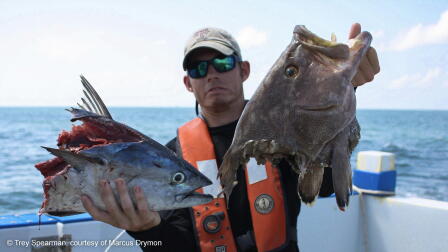
Scientists study the devastating impacts of the Deepwater Horizon oil rig disaster.


Unlock with PBS Passport
26:42
Discover the Cordell Bank, a magical underwater island few people have ever heard of.

Unlock with PBS Passport
26:42
Scientists study tarpon, bonefish and permit to better understand their behaviors.


Unlock with PBS Passport
26:43
Modern technology is making it possible to correlate dolphin sounds and behavior.