
Up Next



Back to Show
Lost LA
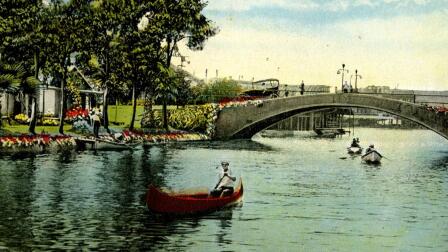
Semi-Tropical L.A.: How the Sunny Southland Sold Itself
When the transcontinental railroad reached Southern California in 1876, it connected Los Angeles with the population centers and markets of the eastern U.S., fueling a boom that transformed a remote cowtown into a city. It also fueled a powerful promotional machine that promised more about Southern California – and its “semi-tropical” climate – than reality could support. Los Angeles has been struggling under the weight of its own mythology ever since.
Support Provided By


27:42
From a barn to a bowl to a tower, the early history of Hollywood.

29:00
Hidden in plain sight, neon, mosaics and stained-glass shaped Los Angeles’ backdrop.

27:04
Exploring two fruit trees that transformed Southern California.

28:08
Nathan visits Surfridge, the Tehachapi Loop and the largest collection of Thomas Guides.

26:29
From wildflowers to jacarandas, explore the plants that paint California in vibrant hues.

26:40
Discover how the True Crime genre was shaped by its deep historic legacy in Los Angeles.

26:43
Uncover the origins of the sci-fi genre and its unique connection to historic Los Angeles.

27:10
Auto racing's LA roots, from dry lake beds to movie ranches, left tread marks across the region.


27:05
Trace the devastation of the 1928 St. Francis Dam collapse and its deadly flood.

