
Up Next



Back to Show
Lost LA
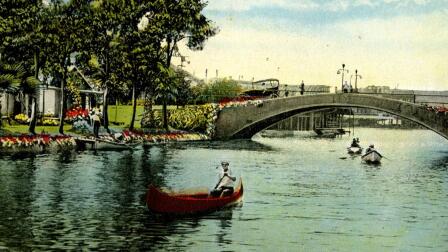
Semi-Tropical L.A.: How the Sunny Southland Sold Itself
When the transcontinental railroad reached Southern California in 1876, it connected Los Angeles with the population centers and markets of the eastern U.S., fueling a boom that transformed a remote cowtown into a city. It also fueled a powerful promotional machine that promised more about Southern California – and its “semi-tropical” climate – than reality could support. Los Angeles has been struggling under the weight of its own mythology ever since.
Support Provided By


25:06
See how the many restrictions many Angelenos had to navigate, exposing Los Angeles as a place of coded segregation and resistance.

23:50
Los Angeles is often identified with Hollywood, but there's more to the entertainment industry than its facade of movie stars and blockbuster films.

25:32
Wood, iron, steel, concrete -- these are the materials that gave form to Los Angeles and shaped its identity in the national imagination. This episode also questions the cultural legacy and environmental costs of the city's relentless growth.


26:50
American history has long been told as a triumphant march westward from the Atlantic coast, but in southern California, our history stretches back further in time.

28:32
In this episode, "Lost LA" examines how the modern metropolis has reshaped its own topography. The program explores downtown L.A.'s lost hills and tunnels, as well as the vanished canals of Venice Beach.

20:57
In this episode, "Lost LA" explores the various ways Southern California's inhabitants have used the hills around Dodger Stadium.
