
Up Next




Back to Show
Changing Seas
The Future of Seafood - Trailer
It is estimated there will be two billion more people on the planet by mid-century. To feed this booming world population, more fish will need to be farmed than ever before. One way to increase fish production in a sustainable way is to move aquaculture operations offshore – where there is plenty of available space and strong currents flush out the pens to avoid polluting sensitive ecosystems.
Support Provided By

Unlock with PBS Passport
27:13
Scientists experimant to see if giant manta rays are impacted negatively by microplastics.

Unlock with PBS Passport
27:13
Changes to the ocean environment affect the way carbon is cycled through the seas.

Unlock with PBS Passport
27:13
Lake Okeechobee, once the blue heart of Florida, now has putrid mats of blue green algae.


Unlock with PBS Passport
26:43
Visit the remote Pacific, the islands of Maug - a natural laboratory for scientists.


Unlock with PBS Passport
26:43
Some scientists are suggesting that ctenophores are the oldest sea animals.


Unlock with PBS Passport
26:44
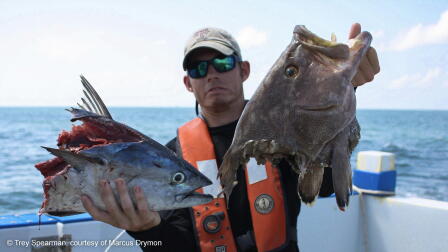
Researchers provide data necessary to protect fish populations from further decline.

Unlock with PBS Passport
26:42
Researchers study what impact ecotourism might have on southern stingrays.

Unlock with PBS Passport
26:43
Researchers are beginning to understand where turtles go during their “lost years.”