
Up Next




Back to Show
Lost LA
Wild West
Season 2
Episode 2
Long before Hollywood imagined the Wild West, Los Angeles was a real frontier town of gunslingers, lynch mobs, and smoke-belching locomotives. This episode examines L.A.'s efforts to reckon with its violent past by examining hanging trees, remnants of vigilant justice; the massacre of eighteen Chinese immigrants that took place in 1871 near what is now Olvera Street; and railroad promotional campaigns that painted a picture of Los Angeles as a verdant paradise.
Lesson Plan: What were the causes of the anti-Chinese massacre?
Support Provided By


26:17
Although best known for designing the homes of celebrities like Lucille Ball and Frank Sinatra, the pioneering African-American architect Paul Revere Williams also contributed to some of the city’ s most recognizable civic structures.

26:40
Prohibition may have outlawed liquor, but that didn’t mean the booze stopped flowing. Explore the myths of subterranean Los Angeles, crawl through prohibition-era tunnels, and visit some of the city’s oldest speakeasies.

26:40
During World War II, three renowned photographers captured scenes from the Japanese incarceration: outsiders Dorothea Lange and Ansel Adams and incarceree Tōyō Miyatake who boldly smuggled in a camera lens to document life from within the camp.

26:48
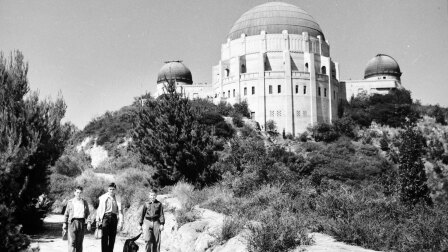
Griffith Park is one of the largest municipal parks in the United States. Its founder, Griffith J. Griffith, donated the land to the city as a public recreation ground for all the people — an ideal that has been challenged over the years.

26:40
Los Angeles has long been the place where you can imagine something — a time period, a location, ordinary or exotic, real or fantasy — and build it. It’s a tradition that dates back to the 1910s and 1920s, when early filmmakers built huge, elaborately themed sets that often remained standing for months or years, inviting visitors to explore and to imagine being a part of the action. It found its fullest expression in nearby Anaheim, where Walt Disney’s Imagineers created the intricately themed, immersive experience that is Disneyland.


26:40
Some California dreams did succeed, creating a megalopolis in the state’s north and south. Other dreams failed, leaving only ruins behind. This episode explores the hopes and dreams of three California ghost towns. We feature Bodie, an early gold mining settlement in Mono County that continues to be preserved in time; Llano Del Rio, a socialist utopian community in the Mojave Desert; and Zzyzx, a former health spa community that came to an end with the eviction of founder and radio evangelist Curtis Howe Springer.

26:39
This episode explores how surfers, bodybuilders, and acrobats taught Californians how to have fun and stay young at the beach — and how the 1966 documentary The Endless Summer shared the Southern California idea of the beach with the rest of the world.

26:40
California’s deserts have sparked imaginations around the world. This episode explores the creation of the Salton Sea; the effort to preserve Joshua Tree National Park; and how commercial interests created desert utopias like Palm Springs.


51:47
"Lost L.A.: Descanso Gardens" explores the history of one of southern California's most-beloved public gardens.

26:50
Americans have long looked at the California shore and seen the end of the continent. Instead, this episode interprets that sandy edge as the beginning of a Pacific world.